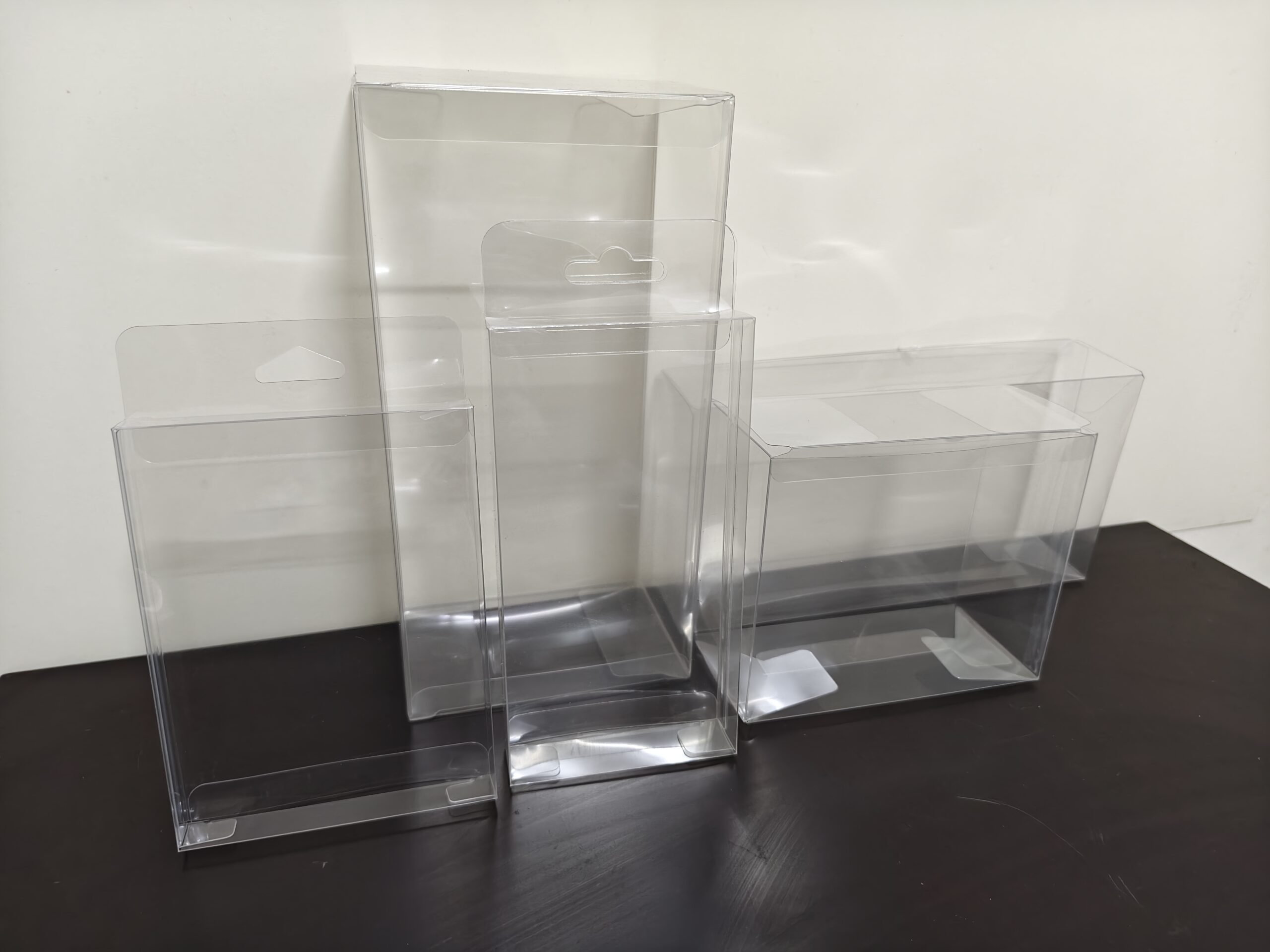
Choosing the right PET packaging box closure style is important because the closure affects how easily the box can be assembled, how securely it holds the product, and how the packaging performs during transport and retail display.
Different products may require different closure structures. A lightweight cosmetic item may only need a simple tuck-end closure, while heavier products may require a stronger bottom-locking structure.
The best closure style depends on several factors, including product weight, box size, PET thickness, assembly requirements, and whether the package needs to hang on a retail display.
In this guide, we will explain the most common PET packaging box closure styles and how to choose the right option for your product.
What Is a PET Packaging Box Closure Style?
A PET packaging box closure style refers to the way the top, bottom, or opening of the box is designed to close and hold the package together.
The closure structure can affect box strength, assembly speed, product security, appearance, and production cost.
Some PET boxes use simple tuck flaps, while others use locking bottoms, snap-lock structures, hanging tabs, or additional inserts depending on the product and packaging requirements.
Choosing the correct closure style helps ensure that the box is practical to assemble and suitable for the weight and shape of the product inside.
Common PET Packaging Box Closure Styles
PET packaging boxes can use different closure structures depending on the product weight, box size, display requirements, and assembly method.
The following are some of the most common closure styles used for custom PET folding boxes.
Tuck-End Closure
A tuck-end closure is one of the most common and simple closure styles for PET folding boxes.
The top or bottom flap is inserted into the box opening to keep the package closed. This structure is easy to understand, relatively quick to assemble, and suitable for many lightweight products.
Tuck-end closures are commonly used for cosmetics, phone accessories, small gifts, and other retail products where the product weight is not too heavy.
For heavier products, the bottom structure may need additional locking support to prevent the box from opening during handling or transport.
Snap-Lock Bottom
A snap-lock bottom uses several bottom flaps that fold and lock together to create a stronger base.
Compared with a simple tuck-end bottom, this structure can provide better support for products with more weight.
It is often used when the package needs additional bottom strength but still requires manual assembly.
The exact structure should be tested based on the product weight, box dimensions, and PET thickness before mass production.
Auto-Lock Bottom
An auto-lock bottom is designed so that the bottom panels automatically move into position when the box is opened and formed.
Compared with a manual snap-lock bottom, this structure can help improve assembly efficiency, especially when a larger number of boxes need to be packed.
It can also provide better bottom support for products that are heavier than those typically packed in a simple tuck-end box.
However, the structure is more complex and should be designed according to the box size, PET thickness, product weight, and packing method.
Hanging Tab Closure
A hanging tab allows the PET packaging box to be displayed on retail hooks or pegboards.
This structure is commonly used for phone accessories, small electronic accessories, toys, hardware items, and other products that are often sold in hanging displays.
The hanging area must be strong enough to support the total weight of the packaged product.
For heavier items, the hanging tab structure and PET thickness should be carefully evaluated to reduce the risk of tearing or deformation during retail display.
For phone accessories and other small retail products, you can also review our custom PET packaging boxes for phone accessories guide.
Insert or Inner Tray Support
Some PET packaging boxes use an insert or inner tray together with the outer folding box.
The insert helps hold the product in the correct position and can reduce movement inside the package during handling and transport.
This structure is useful for products that need better presentation, added protection, or more stable positioning inside the box.
The insert design should match the product dimensions and the outer box structure so that the package remains easy to assemble and does not place too much pressure on the PET panels.
You can also review our PET packaging box styles guide to compare different box structures before choosing the final design.
How to Choose the Right PET Packaging Box Closure Style
The right PET packaging box closure style should be selected based on how the package will be used, assembled, displayed, and transported.
There is no single closure structure that is suitable for every product. The best option depends on the product weight, box dimensions, PET thickness, assembly speed, retail display method, and the level of support required.
Consider the Product Weight
Product weight is one of the most important factors when choosing a closure structure.
For lightweight products, a simple tuck-end closure may provide enough support and can keep the packaging easy to assemble.
For heavier products, a snap-lock bottom or auto-lock bottom may provide better support and reduce the risk of the bottom opening during handling.
The closure design should always be tested together with the actual product before mass production.
Match the Closure to the Box Size
Box size can also affect how well a closure structure performs.
A closure that works well on a small PET box may not provide the same strength on a larger box, especially when the product is heavier or the PET panels are longer.
Larger boxes may require stronger locking structures, wider flaps, or additional support to maintain stability.
The final closure design should be matched to both the box dimensions and the product inside.
Consider PET Thickness
PET thickness can affect both the strength of the box and how well the closure structure works.
Thicker PET material can provide better rigidity and support, but it may also require adjustments to crease lines, flap dimensions, and locking positions.
If the PET is too thin for a heavier product, the box may deform or the closure may not remain secure during handling.
The material thickness should therefore be selected together with the box size, product weight, and closure structure rather than considered separately.
For more details, read our guide on choosing the right PET packaging box thickness for different products.
Consider Assembly Efficiency
Assembly speed is another important factor, especially for larger production runs.
Simple tuck-end closures are generally easy to fold and close manually, while snap-lock bottoms require more steps during assembly.
Auto-lock bottoms can improve packing efficiency because the bottom forms more quickly when the box is opened.
When choosing a closure style, buyers should consider not only box strength but also how much time and labor will be required during packing.
Consider Retail Display Requirements
The way the product will be displayed in stores can also affect the choice of closure style.
If the package will stand on a shelf, the bottom structure should provide enough stability to keep the box upright.
If the package needs to hang on hooks or pegboards, a hanging tab or reinforced hanging structure may be required.
For retail packaging, the closure should also help keep the product secure while maintaining a clean and attractive appearance on display.
Test the Structure Before Mass Production
Before mass production, the final closure structure should be tested with the actual product whenever possible.
The test should confirm that the box can be assembled smoothly, the closure stays secure, the product fits correctly, and the packaging can withstand normal handling.
If the box uses a locking bottom, hanging tab, or insert, these areas should be checked carefully because they directly affect product support and packaging performance.
A physical sample can help identify structural problems before they are repeated across the full production run.
You can also review our PET packaging box sample inspection guide before approving the final structure for mass production.
Quick Comparison of PET Packaging Box Closure Styles
Different closure styles are suitable for different packaging needs.
A simple tuck-end closure is usually suitable for lightweight products and easy manual assembly, while snap-lock and auto-lock bottoms provide stronger support for heavier products.
Hanging tab structures are better for retail hook displays, while inserts or inner trays help keep products in position and improve presentation.
The final choice should balance product weight, box size, PET thickness, assembly efficiency, and retail display requirements.
- Tuck-end closure: Suitable for lightweight products and simple assembly
- Snap-lock bottom: Provides stronger bottom support
- Auto-lock bottom: Helps improve packing efficiency
- Hanging tab closure: Suitable for hook or pegboard displays
- Insert or inner tray: Helps improve product positioning and presentation
Final Thoughts
Choosing the right PET packaging box closure style is an important part of creating packaging that is secure, practical, and easy to use.
The best closure structure depends on the product weight, box dimensions, PET thickness, assembly method, and retail display requirements.
Before mass production, the final structure should be tested with the actual product whenever possible to confirm that the box can be assembled smoothly and that the closure provides enough support.
If you are unsure which closure style is suitable for your product, providing the product dimensions, weight, packaging requirements, and expected display method can help the manufacturer recommend a more appropriate structure.
If you are planning a custom PET packaging box project, contact us with your product size, weight, quantity, and packaging requirements. We can help evaluate the box structure and recommend a suitable closure style for your project.