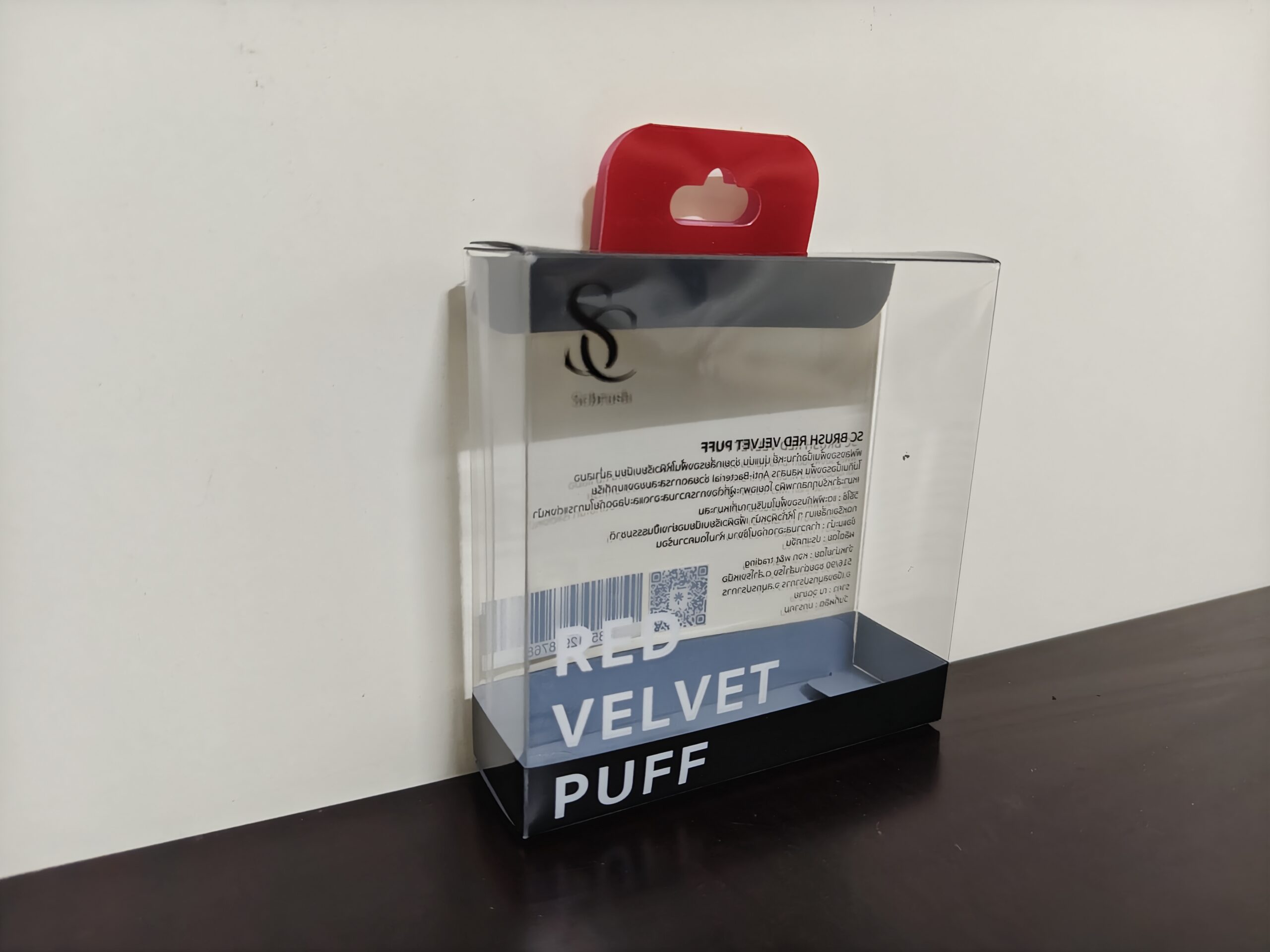
Choosing the right printing method is an important part of creating custom PET packaging boxes. Different printing techniques produce different results in color quality, ink coverage, cost, order quantity, and production time.
The most common PET packaging printing methods include UV printing, offset printing, and screen printing. In this guide, we compare how these methods work, their advantages and limitations, and which option is most suitable for your packaging design.You may also want to review our guide on [how to prepare artwork and dielines for PET packaging boxes].
Why Printing on Clear PET Is Different
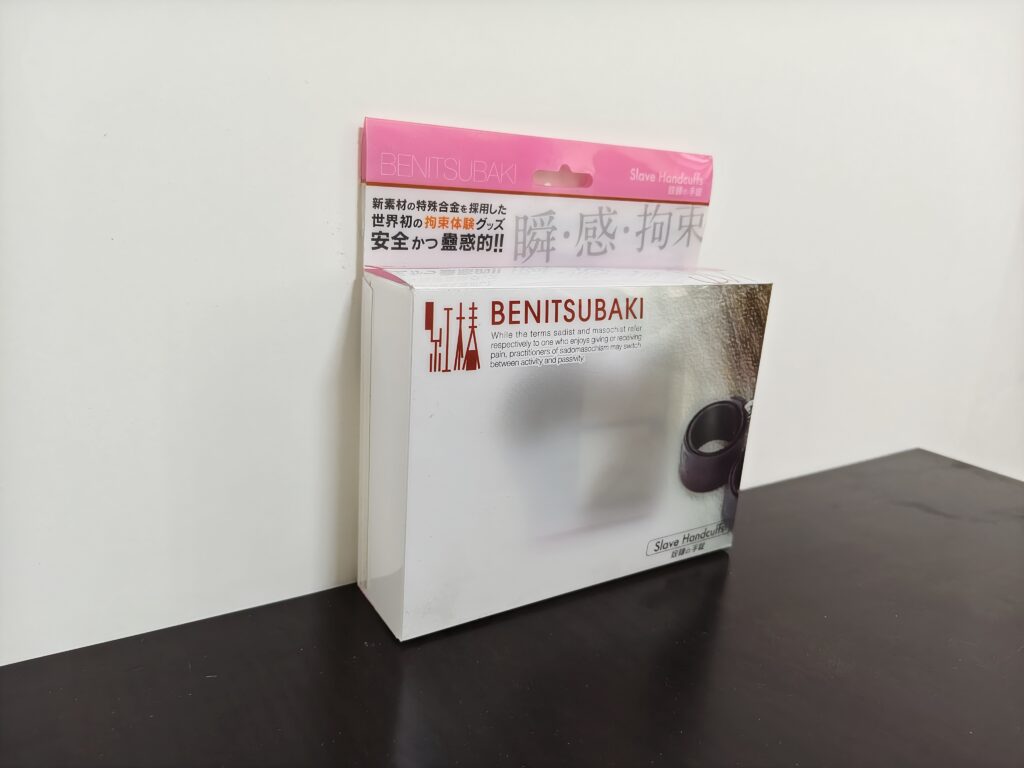
Printing on clear PET is different from printing on paper or opaque plastic because the material is transparent and has a smooth, non-porous surface. Printed colors may appear lighter, more transparent, or less saturated if the ink and printing process are not selected correctly.
White ink is often used as a base layer behind colored graphics to improve opacity and color visibility. Areas that should remain transparent must also be clearly marked in the artwork so the manufacturer can separate clear windows, printed areas, and special finishing layers.Learn more about the material characteristics in our [PET vs PVC vs PP packaging comparison].
What Is UV Printing?
UV printing uses ultraviolet light to cure or dry the ink immediately after it is printed. Because the ink dries quickly, it can produce sharp graphics, strong color coverage, and detailed images on smooth PET surfaces.
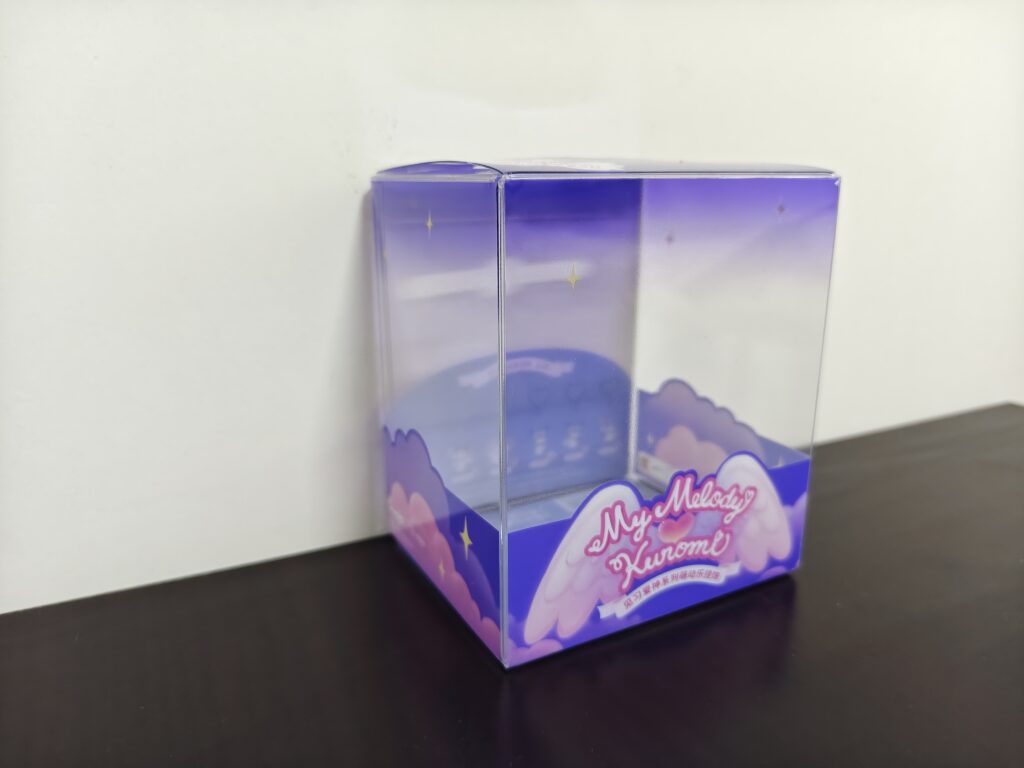
For transparent PET packaging, UV printing can be used for logos, patterns, text, gradients, and full-color graphics. White ink can also be added underneath selected areas to make colors appear more solid and visible.
Advantages of UV Printing
- Fast ink curing and short production time
- Sharp details and high-resolution graphics
- Good adhesion on smooth PET surfaces
- Suitable for full-color and gradient designs
- White ink and spot UV options available
- Good choice for medium and small custom orders
Limitations of UV Printing
Although UV printing offers excellent detail and fast curing, it may not be the most economical option for every project. The final cost depends on the artwork complexity, ink coverage, number of colors, white ink requirements, and order quantity.
- Higher unit cost for very large production runs
- White ink and heavy ink coverage may increase cost
- Color results may vary without proper artwork preparation
- Surface treatment may be required for better ink adhesion
- Not always ideal for extremely simple one-color designs
- A printed sample is recommended for color-critical projects
What Is Offset Printing?
Offset printing transfers ink from a printing plate to a rubber blanket and then onto the PET sheet. It is commonly used for detailed graphics, smooth color transitions, and larger production quantities.
For PET packaging boxes, offset printing can produce fine text, accurate brand colors, and consistent full-color images. However, the PET surface may require treatment or special inks to improve adhesion and prevent the printed layer from scratching or peeling.
Advantages of Offset Printing
- Excellent color consistency for large production runs
- Suitable for detailed images and fine text
- Good performance for full-color CMYK artwork
- Lower unit cost at higher order quantities
- Stable results for repeated orders
- Suitable for complex printed packaging designs
Limitations of Offset Printing
- Higher setup cost because printing plates are required
- Less economical for small custom orders
- Longer preparation time than UV printing
- White ink may require an additional printing process
- Surface treatment may be needed for PET adhesion
- Artwork changes after plate production may increase cost
What Is Screen Printing?
Screen printing pushes ink through a fine mesh screen onto selected areas of the PET sheet. Each color normally requires a separate screen, making this method especially suitable for simple designs, solid colors, logos, text, and special inks.
For transparent PET packaging boxes, screen printing can create strong ink coverage and highly visible graphics. It is often used when the design requires white ink, metallic ink, bold brand colors, or a limited number of spot colors.
Advantages of Screen Printing
- Strong and opaque ink coverage
- Excellent for white ink and solid spot colors
- Suitable for simple logos, text, and bold graphics
- Good adhesion when the PET surface is properly treated
- Metallic, fluorescent, and other special inks are available
- Economical for simple designs with fewer colors
Limitations of Screen Printing
- Each color normally requires a separate screen
- Less suitable for detailed photographic images
- Color gradients are more difficult to reproduce
- Setup cost increases when more colors are used
- Fine text and very small details may be difficult to print
- Color registration must be controlled carefully
UV Printing vs Offset Printing vs Screen Printing
| Feature | UV Printing | Offset Printing | Screen Printing |
| Best for | Detailed graphics and medium orders | Large-volume full-color orders | Simple logos and solid colors |
| Color detail | Excellent | Excellent | Good |
| White ink | Available | Requires additional process | Excellent |
| Gradients | Excellent | Excellent | Limited |
| Setup cost | Medium | High | Medium |
| Unit cost | Good for small and medium runs | Lower for large runs | Good for simple low-color designs |
| Production speed | Fast | Medium | Medium |
UV printing is usually the most flexible option for detailed custom packaging and medium order quantities. Offset printing is often more economical for large production runs with complex full-color artwork. Screen printing is a strong choice for simple designs, solid colors, white ink, and special spot-color effects.
How to Choose the Right PET Packaging Printing Method
The best PET packaging printing method depends on your artwork, order quantity, color requirements, budget, and expected appearance.
Choose UV printing when your design includes detailed graphics, gradients, multiple colors, or medium-volume custom orders.
Choose offset printing when you need consistent full-color results for large production quantities and want to reduce the unit cost.
Choose screen printing when your artwork mainly uses simple logos, solid colors, white ink, metallic ink, or other special spot-color effects.
Before confirming production, it is recommended to provide the artwork, box dimensions, expected order quantity, and printing requirements to the manufacturer for evaluation.
Questions to Confirm Before Printing
- How many colors are included in the artwork?
- Is white ink required behind the printed graphics?
- Does the design include gradients or photographic images?
- What is the estimated order quantity?
- Are metallic ink, fluorescent ink, spot UV, or hot stamping required?
- Which areas of the PET box should remain transparent?
Frequently Asked Questions
Which printing method is best for PET packaging boxes?
There is no single best method for every project. UV printing is suitable for detailed graphics and medium-volume custom orders, offset printing is often better for large full-color production runs, and screen printing works well for simple logos, solid colors, and special inks.
Can white ink be printed on transparent PET?
Yes. White ink is commonly used as a base layer behind colored graphics to improve opacity and color visibility on transparent PET packaging.
Which printing method is suitable for small orders?
UV printing is usually more flexible for small and medium custom orders because it requires less preparation than traditional offset printing.
Can screen printing reproduce gradients and photographs?
Screen printing is mainly suitable for solid colors, logos, and simple graphics. Detailed photographs and smooth gradients are usually better produced with UV or offset printing.
Need Help Choosing a Printing Method?
If you are not sure which printing method is suitable for your PET packaging boxes, send us your artwork, box dimensions, order quantity, and printing requirements.
Our team can review the design and recommend a suitable printing method based on color coverage, transparency, budget, and production quantity.You can also explore our [custom PET packaging boxes] and [PET packaging box manufacturing process].
Comments
2 responses to “UV Printing vs Offset Printing vs Screen Printing for PET Packaging Boxes”
[…] For more information about suitable processes, compare our PET packaging printing methods. […]
[…] can also compare different PET packaging printing methods before choosing the most suitable option for your […]